|

|
Volume 1, Issue 1 |
|
Formerly the Ocean Acidification Report |
|
August 2026 |
|
Sea. Land. People. |
|
The ocean doesn't care where we solve the problem; it cares that we do. |
|
|
Dear ::subscriber.first_name::, |
|
Welcome to the inaugural issue of the Ocean Health Report, formerly the Ocean Acidification Report. From 2014 to 2021, this publication tracked ocean acidification: the gradual chemical changes caused by the ocean absorbing our carbon emissions. Beginning with this issue, we are widening the lens.
Ocean acidification remains central to our work. It is part of a much broader story about a changing ocean. The Ocean Health Report will explore interconnected issues including ocean warming, hypoxia, coastal ecosystem change, fisheries, Indigenous leadership, ocean governance, and marine carbon dioxide removal, or mCDR.
The relationship between ocean acidification and mCDR is an important part of that story. The first essay in this issue traces how the science that revealed the consequences of the ocean absorbing carbon is now also informing efforts to use the ocean as part of the climate solution.
Each issue will feature Global Ocean Health perspectives and expert context to help readers follow emerging developments across ocean science, policy, and communities.
The Ocean Health Report exists because people like you believe informed collaboration matters. Every donation helps keep this publication independent, accessible, and focused on solutions for ocean health. Give today to keep it going. Please add “OHR” in the notes section when donating so we can direct your gift accordingly. |
|
|
From Global Ocean Health |
To open the links below, scroll to the bottom of this email and click “View entire message.” |
Resources & Recommended Reading |
|
Marine Carbon Removal |
|
Ocean Warming & Climate Systems |
|
Coastal Ecosystems & Water Quality |
|
Additional Resources & Recommended Reading |
Help Our Work Continue |
|
|
|
From Global Ocean Health |
|
OCEAN ACIDIFICATION · MARINE CARBON REMOVAL |
Ocean Acidification and the Case for Marine Carbon Removal |
|
By Laura Gibson, Global Ocean Health |
|
Ocean acidification and marine carbon dioxide removal are often discussed as separate fields: one concerned with damage, the other with possible solutions. Both grew, however, from the same increasing understanding of how the ocean absorbs, moves, and stores carbon.
In the 1950s, oceanographer Roger Revelle and chemist Hans Suess studied how carbon dioxide moves between the atmosphere and the ocean. At the time, most scientists assumed the ocean would simply soak up nearly all the CO₂ released by burning fossil fuels. Revelle and Suess showed that seawater chemistry and ocean circulation put real limits on how quickly the ocean could take up extra carbon, with the implication that atmospheric CO₂ would build up instead. Revelle and Suess described humanity’s release of fossil carbon as “a large-scale geophysical experiment”: an unprecedented alteration of the planet’s carbon system, undertaken without knowing where it would lead.
Their work helped lay the foundation for modern climate science by establishing that fossil-fuel emissions could cause atmospheric carbon dioxide to rise, a prediction soon confirmed by direct measurements. It also pointed to something else: the carbon absorbed by the ocean doesn't just vanish. When CO₂ dissolves in seawater, it reacts chemically and shifts the balance of carbonic acid, bicarbonate, and carbonate ions. As the ocean takes up more human-produced carbon, its pH drops and carbonate becomes harder for shellfish, corals, and other organisms to access. Today the ocean absorbs roughly 30 percent of the CO₂ we release. That slows warming, but at a real cost to the ocean and the marine life that depends on it. |
|
Richard Feely spent more than five decades at NOAA documenting exactly that cost. His research tracked how anthropogenic carbon has spread through the ocean and how fast-changing chemistry threatens shellfish, coral reefs, fisheries, and the communities that depend on them. His work is a big part of why ocean acidification moved from an obscure chemistry problem into public policy. As a senior scientific advisor to Global Ocean Health for nearly 20 years, Feely has helped shape our organization’s understanding of the issue while advancing the organization’s mission. |
|
|
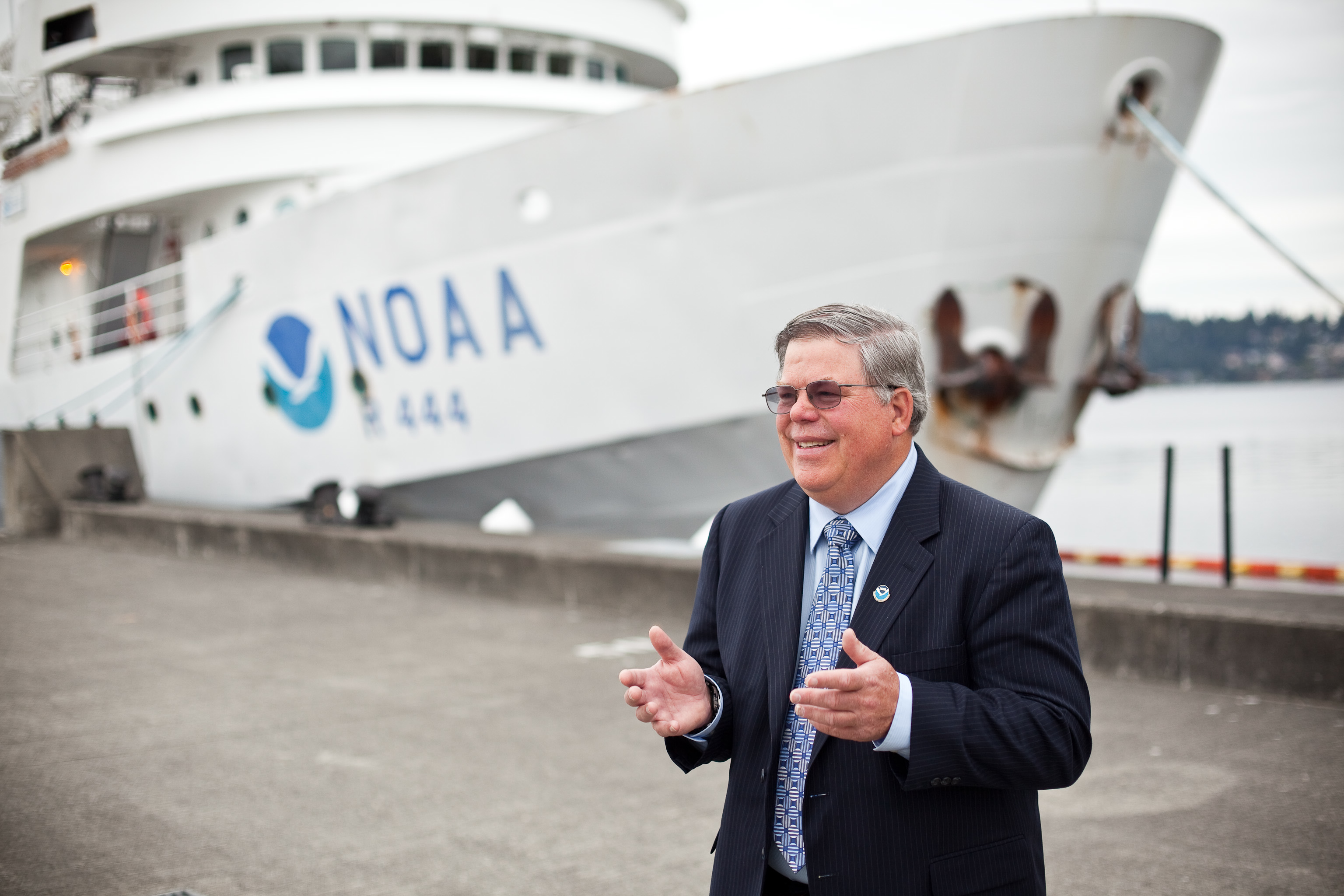
Richard A. Feely, NOAA Oceanographer and Senior Scientific Advisor for over 20 years to GOH. Photo: NOAA. |
|
Marine carbon dioxide removal, or mCDR, grows out of the same body of knowledge. The idea is that the ocean's enormous carbon reservoir, and the biological, chemical, and physical processes that absorb, transport, and store carbon in the ocean, might also be used deliberately to pull additional CO₂ out of the atmosphere. Proposed approaches include growing marine biomass, restoring coastal ecosystems, increasing seawater alkalinity, and using electrochemical processes to remove carbon from seawater or increase its capacity to absorb more.
There is still a great deal we do not know: the effectiveness of these methods, the durability of the carbon storage, potential ecological side effects, how much energy and material they require, how they can be monitored, and how they will affect people who depend on marine resources.
Together, the work of Revelle, Suess, Feely, and many others traces a clear arc: first understanding the ocean’s enormous capacity to absorb and store carbon, then learning the limits and consequences of that capacity, and now asking whether those same systems can be used as part of the climate solution. Research on ocean acidification showed how far-reaching the consequences can be when ocean chemistry changes at a scale we do not yet fully understand. Any effort to alter those systems deliberately must therefore rest on strong science and precaution, and because the consequences will not be shared equally, it must also be governed transparently and shaped by the people whose livelihoods and cultures are most closely tied to the sea.
|
|
|
|
MARINE CARBON REMOVAL · STRATEGY |
New Report and Resources Outline Options for Tribal Nations to Navigate Growing Carbon Removal Industry |
A new suite of resources from the Supporting Tribal Sovereignty in Carbon Removal initiative supports Tribal Nations as they assess whether and how carbon dioxide removal may serve their environmental, cultural, and economic priorities. |
|
The Supporting Tribal Sovereignty in Carbon Removal initiative released in June a new suite of resources to support Tribal Nations in the United States as they navigate the growing carbon dioxide removal (CDR) industry. The initiative was formed in 2025 by Partnerships for Tribal Carbon Solutions (Global Ocean Health's main program), the Indigenous Greenhouse Gas Removal Commission, the Carbon Business Council, and the Institute for Responsible Carbon Removal at American University to help Tribes and Indigenous communities assess whether and how carbon removal might serve their environmental, cultural, and economic priorities.
Tribal Nations across the U.S. face the climate crisis on the front lines, often bearing the most severe impacts. Scaling CDR to the levels determined necessary by climate models raises important questions around land use, socio-environmental impacts, infrastructure, governance, and long-term stewardship. These questions are increasingly relevant for Tribes as proposed projects intersect with lands and waters under their jurisdiction, and with long-standing priorities of sovereignty, stewardship, and self-determination. These resources are designed to ensure that decision-making about CDR reflects Tribal priorities, values and goals.
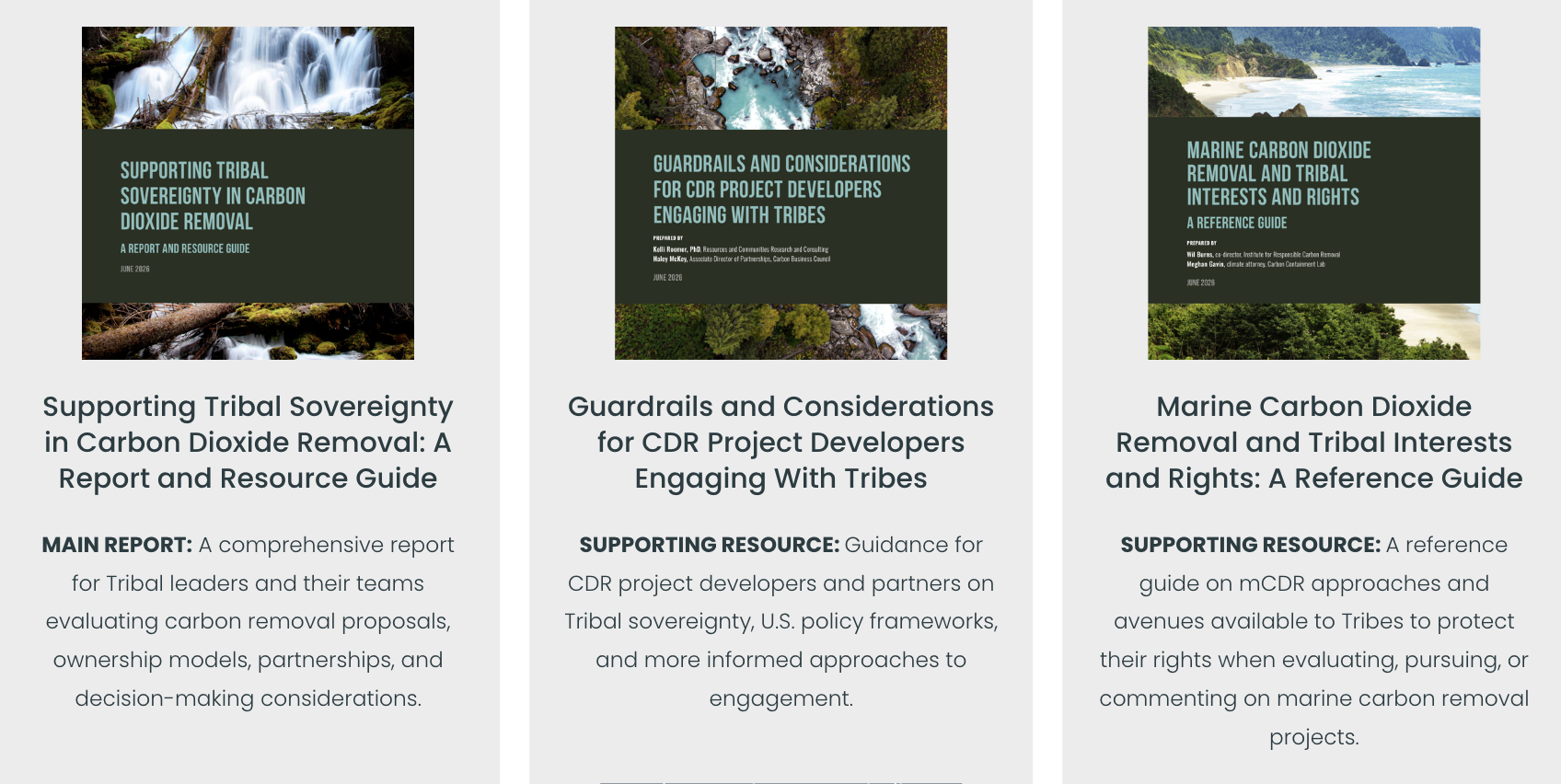
The main report, Supporting Tribal Sovereignty in Carbon Dioxide Removal: A Report and Resource Guide, centers Tribal Nations as climate leaders and strategic partners in shaping the future of the CDR sector, and how Tribal ownership and governance is critical to project outcomes. Developed with insight from Tribal representatives at each stage of its development, the report explores what CDR at scale could mean for Tribal lands and resources, examines ownership models, and draws on case studies across diverse projects and geographies. The report also includes evaluation questions for proposed projects and discussion prompts to support Tribes' internal decision making.
“This report was written for Tribal leaders and their teams — the individuals who will sit across the table from CDR developers, evaluate proposals, and consider whether to lead and own projects themselves,” said Fawn Sharp, president of the Indigenous Greenhouse Gas Removal Commission, in the report’s Foreword. “It provides a foundation for making those decisions on Tribal terms, with a clear understanding of the current landscape.
Alongside the main report, the initiative released two related, supporting resources:
“The CDR sector will grow at a scale that is difficult to fully grasp,” said Sharp. “Our responsibility is to ensure that future generations inherit not only the consequences of that growth but meaningful roles in shaping it as the next stewards of this knowledge and these systems.” |
|
|
|
|
FINANCE · ACCOUNTABILITY |
Who Pays for Carbon Removal? A Key Question from Climate Week Northwest |
|
By Brad Warren & Laura Gibson |
|
|
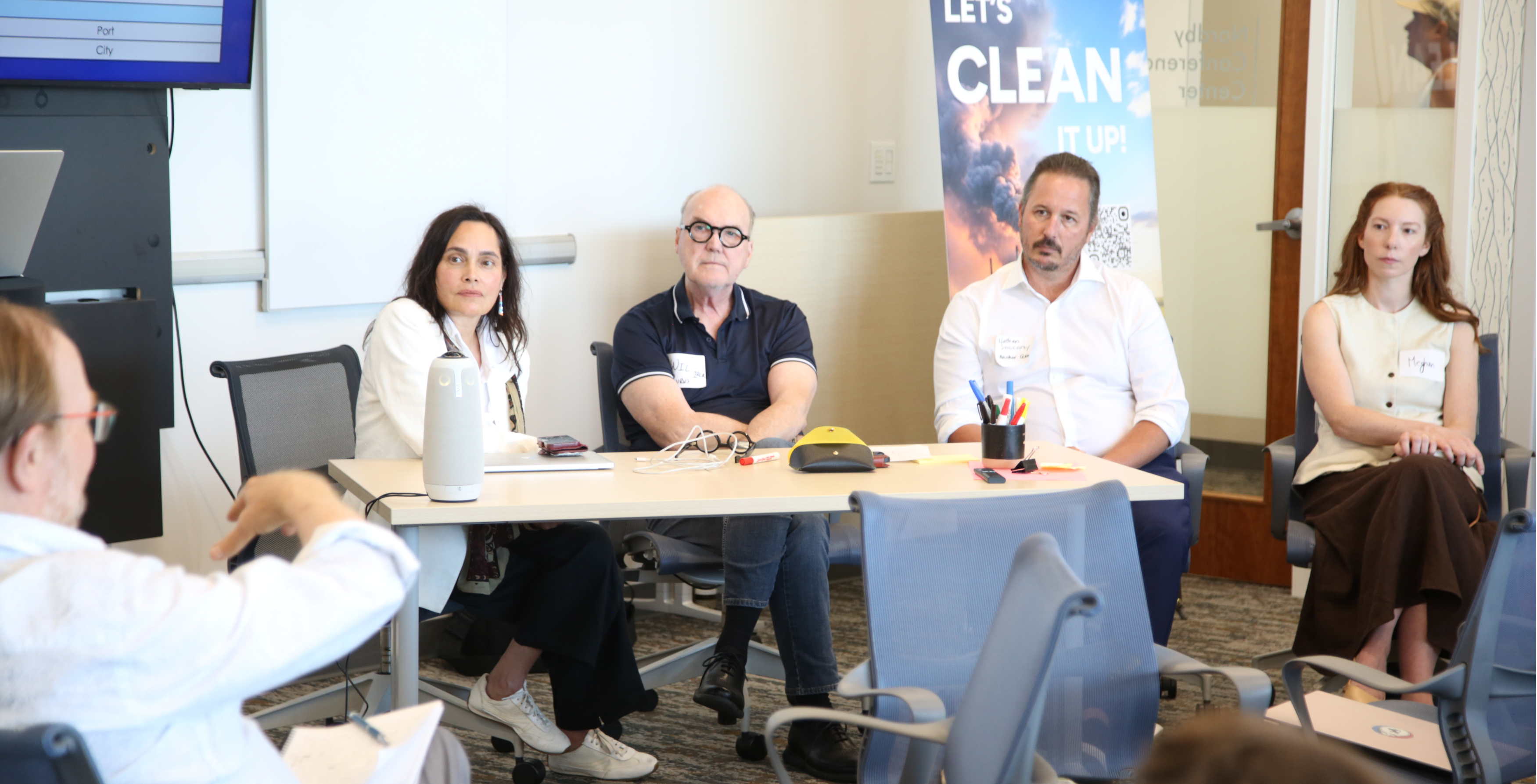
L to R: Francesca Hillery (staff at Global Ocean Health and the Indigenous Greenhouse Gas Removal Commission) moderates a panel on Finance, Governance, and Indigenous Participation in mCDR, with Dr. Wil Burns (Institute for Responsible Carbon Removal at American University, GOH board member), Nathan Soccory (Anchor QEA consulting), and Meghan Gavin (Carbon Containment Lab). |
|
On July 15, Global Ocean Health CEO Brad Warren and Director of Partnerships Francesca Hillery participated in Oceans as Climate Heroes: mCDR Day, a full-day PNW Climate Week event exploring marine carbon dioxide removal science, policy, finance, governance, and justice. Francesca moderated the final panel of the day—“Finance, Governance, and Indigenous Participation in mCDR.”
The most expensive way to deal with pollution is to wait until you’ve made a big, dangerous mess and then call 911. Naturally, that’s the path our modern world has chosen. As the IPCC has been telling us for a decade, we humans must tighten the spigot on new pollution, and we must also work out how to pay for cleanup of a dangerous backlog of carbon emissions that is wreaking havoc on fisheries, farms, water supplies, and just about anything that can catch fire -- more than 150 million hectares (roughly 370 million acres) burned globally between January and April 2026 alone, the highest four-month total in the available satellite record (Stanway 2026).
|
|
|
|
INDIGENOUS LEADERSHIP · REPORT |
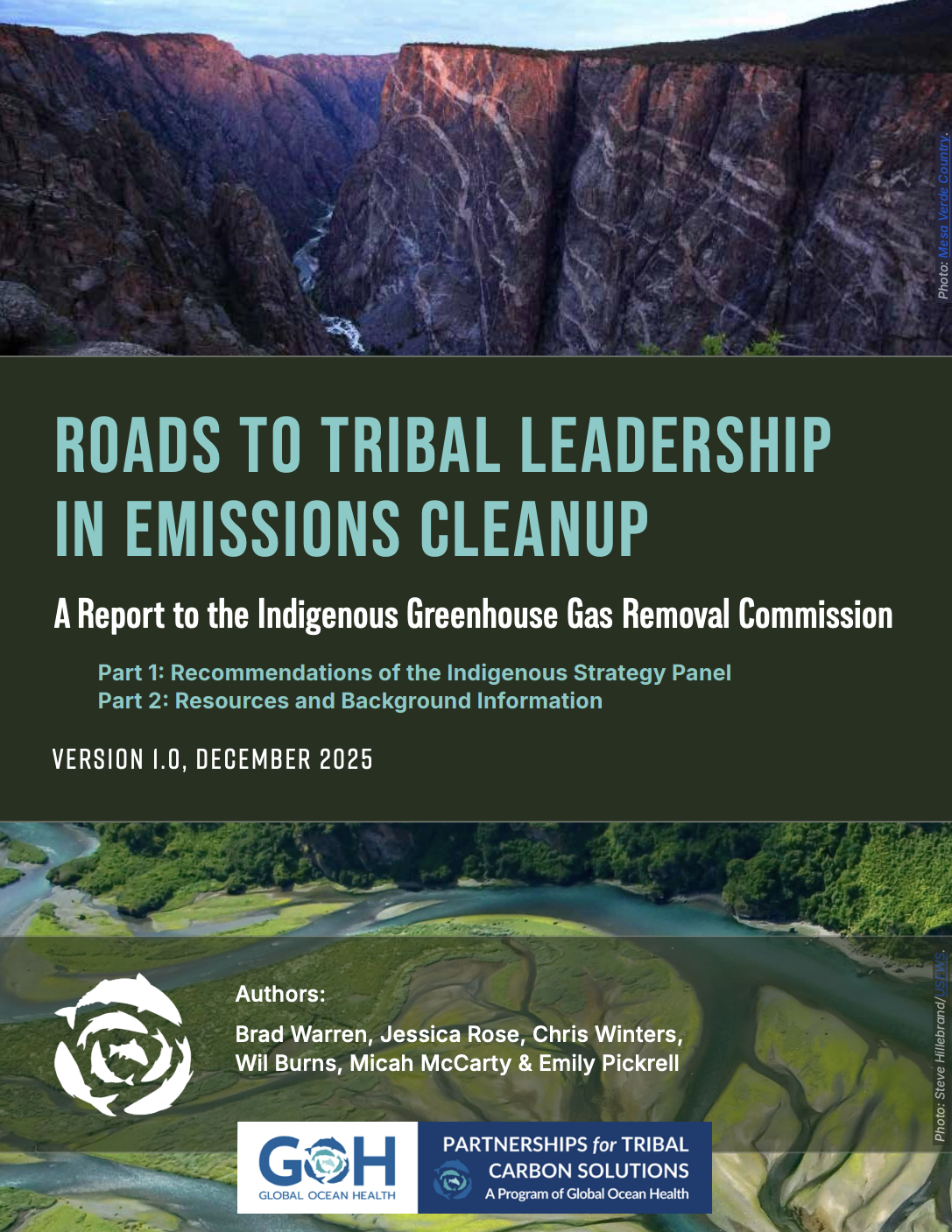
Road to Tribal Leadership in Emissions Cleanup: A Report to the Indigenous Greenhouse Gas Removal Commission |
|
This report presents strategic recommendations from the Indigenous Strategy Panel, a multidisciplinary advisory group convened by Global Ocean Health to support the early work of the Indigenous Greenhouse Gas Removal Commission (IGGRC).
The report responds to a central concern raised by the late Terry R. Williams of the Tulalip Tribes: that the fast-growing field of carbon and greenhouse gas removal will inevitably intersect with Tribal lands, waters, rights, and governance authority — and that Tribes need a meaningful seat at the table before policies, markets, and project models are already locked in.
Part I of the report offers recommendations to help guide the IGGRC as it works to build Tribal capacity, coordinate learning, and advance Indigenous leadership in greenhouse gas removal governance. These recommendations are not prescriptive mandates. They are offered as a strategic framework for collective deliberation, grounded in Tribal sovereignty, technical reality, and multigenerational stewardship. |
|
|
Part II provides background information and resources for Tribes and partners evaluating opportunities and risks in this emerging field, including Tribal governance of carbon sequestration wells, marine carbon dioxide removal, carbon market and governance considerations, opportunity assessment tools, and potential applications related to Tribal food and water sovereignty, salinated water, and biochar.
Together, the report explores why Tribal engagement in carbon and greenhouse gas removal matters, how it can be approached responsibly, and where firm boundaries are essential. |
|
|
|
INDIGENOUS LEADERSHIP · PODCAST |
Plan Sea Podcast | Indigenous Leaders Fawn Sharp, Francesca Hillery, and Ken Paul on the Role of Indigenous Knowledge in Ocean Climate Solutions |
|

|
In May 2026, IGGRC President Fawn Sharp and Francesca Hillery, GOH and IGGRC’s Director of External Affairs and Partnerships, participated in Carbon to Sea’s fourth annual convening in Halifax, Nova Scotia. Global Ocean Health helped bring together Fawn, Francesca, and Ken Paul for this Plan Sea Podcast conversation with host Anna Madlener and guest host Danny Gawlowski on the importance of Indigenous partnerships and knowledge systems in the developing field of ocean-based carbon dioxide removal. |
|
|
About Global Ocean Health |
|
Founded in 1994, Global Ocean Health is a nonprofit that builds collaborative solutions to protect seafood supplies, coastal communities, and marine ecosystems from pollution—especially greenhouse gas pollution. We bring together Tribes, fishermen, seafood growers, scientists, government officials, and other partners, often across traditional divides, to address the greatest challenges facing the ocean and those who depend on it. Through research, learning networks, scientific and policy expertise, communications, training, and demonstration projects, we help ocean-dependent communities document changing conditions, reduce harm, build resilience, and tackle the underlying sources of pollution—so the ocean can keep making dinner. |
|
Learn more about Global Ocean Health at globaloceanhealth.org and our largest program, Partnerships for Tribal Carbon Solutions, at tribalcarbonsolutions.org. |
|

|
|
Marine Carbon Removal |
|
Innovators who are working on ways to pull carbon dioxide out of the atmosphere to fight climate change are having a tough time lately.
Their biggest supporter, Microsoft, recently began telling partners that it is pausing its carbon removal purchases. To get a sense of how big of a deal this is, look at the numbers: The tech company alone has purchased approximately 80% of the contracted cumulative volume of carbon removals to date. Its retrenchment is viewed as potentially a major blow to the sector.
However, there may be a bright spot for this industry, and it comes from an unexpected source: The U.S. Environmental Protection Agency quietly decided in March to grant a research permit under the Marine Protection, Research, and Sanctuaries Act to a Houston-based carbon removal startup. |
|
|
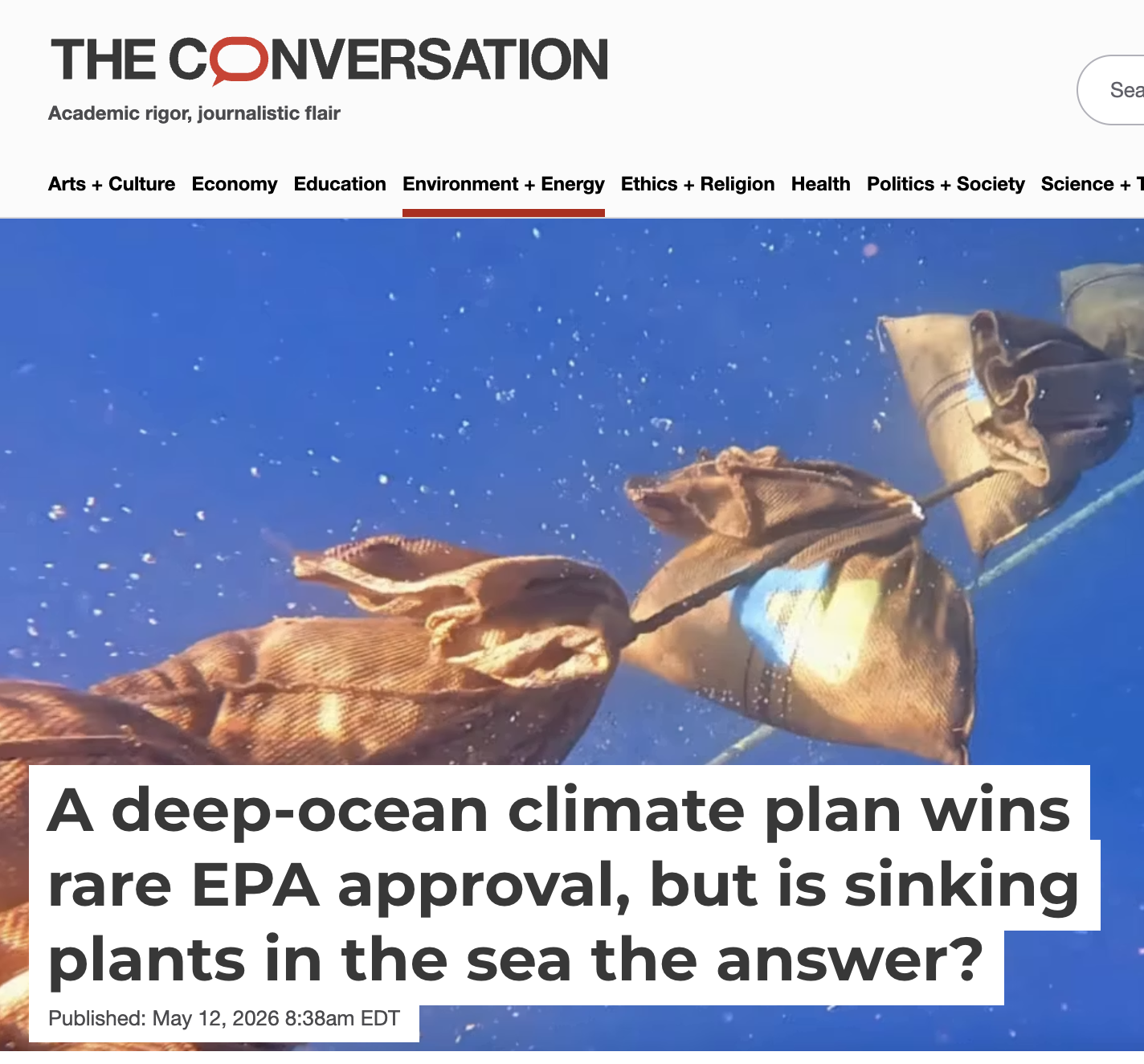
The company, Carboniferous, aims to assess the potential to durably lock up greenhouse gases by harvesting plants that took in carbon dioxide on land and sinking them to the bottom of the ocean.
This approach is often called “ocean biomass sinking,” or marine anoxic carbon storage.
Ocean biomass sinking is one of several carbon removal approaches involving the ocean known as “marine carbon dioxide removal.” Other marine approaches include adding alkaline materials that react with seawater to increase the uptake of carbon dioxide, seeding oceans with iron to stimulate the growth of phytoplankton that can take up carbon dioxide, and farming seaweed to also take up carbon dioxide and sink it. |
|
The Intergovernmental Panel on Climate Change, which compiles research on climate change from scientists around the world, calls carbon dioxide removal “unavoidable” if the world hopes to keep rising temperatures in check and achieving the targets of the Paris climate agreement.
But is sinking biomass in the ocean the answer?
I am the co-founding director of the Institute for Responsible Carbon Removal at American University, and I have reviewed several of these projects. I see both pros and cons to ocean carbon removal techniques. |
|
|
Marine Carbon Removal • Recommended Reading |
|
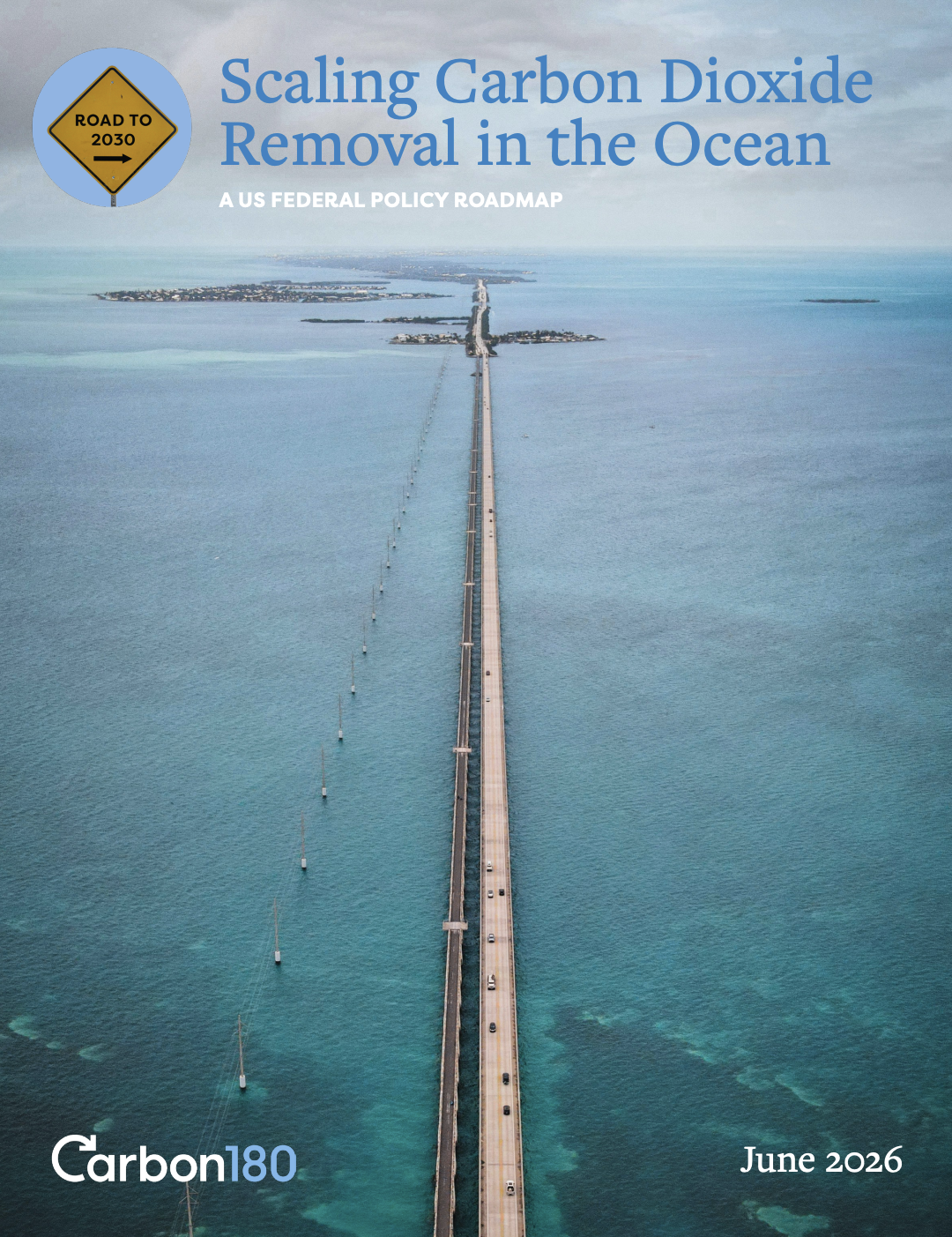
Scaling Carbon Dioxide Removal in the Ocean: A US Federal Policy Roadmap Carbon 180, June 2026 - By Stacy Aguilera-Peterson, Ph.D. and Amanda Vieillard, Ph.D. |
|
Carbon 180’s Scaling CDR in the Ocean: A US Federal Policy Roadmap outlines federal policy recommendations for responsible marine carbon dioxide removal, organized around environmental impact, efficacy and durability, social license, scaling and deployment, and responsible commercialization. |
|
|
International experts meet to advance work on assessing ocean-based climate solutions. Their discussions focus on developing a new framework to guide the evaluation of ocean interventions, including marine carbon dioxide removal. |
|
Marine carbon dioxide removal: an emerging topic for ocean governance and the sustainability agenda The Elgar Companion to Ocean Governance and the Sustainable Development Goals, Chapter 20, May 2026 - By Barbara Neumann et al. |
|
This chapter examines the rise of marine carbon dioxide removal in climate policy and the governance challenges it raises for the ocean. The authors consider whether existing ocean governance systems are equipped to regulate mCDR fairly and effectively, and argue that current weaknesses could become an opportunity to establish stronger, more responsible governance approaches. |
|
ICES Journal of Marine Science, May 2026 - By James A. Gately et al. |
|
Ocean alkalinity enhancement is drawing attention as a possible marine carbon dioxide removal pathway, but its ecological effects remain uncertain. This study examines how abrupt alkalinity additions may affect coastal microbial communities, including changes in diversity and parasite dynamics. |
|
A promising natural technique to remove CO₂ could backfire (article requires subscription) New Scientist, June 2026 - By Alec Luhn |
|
Several start-ups have tried to grow seaweed to remove atmospheric CO₂, but this could affect the levels of nutrients in the ocean and hamper other CO₂-sucking processes. |
|
Fishermen Are Taking Action on Marine Carbon Dioxide Removal The Fishery Friendly Climate Action Campaign |
|
This Fishery Friendly Climate Action Campaign newsletter gathers recent resources on fishermen’s engagement with marine carbon dioxide removal, including fishery-sensitive policy, ocean alkalinity enhancement research, and emerging scientific coordination around mCDR, fisheries, and aquaculture. |
|
Ocean Warming & Climate Systems |
|
The US coastline is heading for an ocean disaster even faster than we thought, study suggests Science Focus, May 2026 - By Tom Howarth |
|
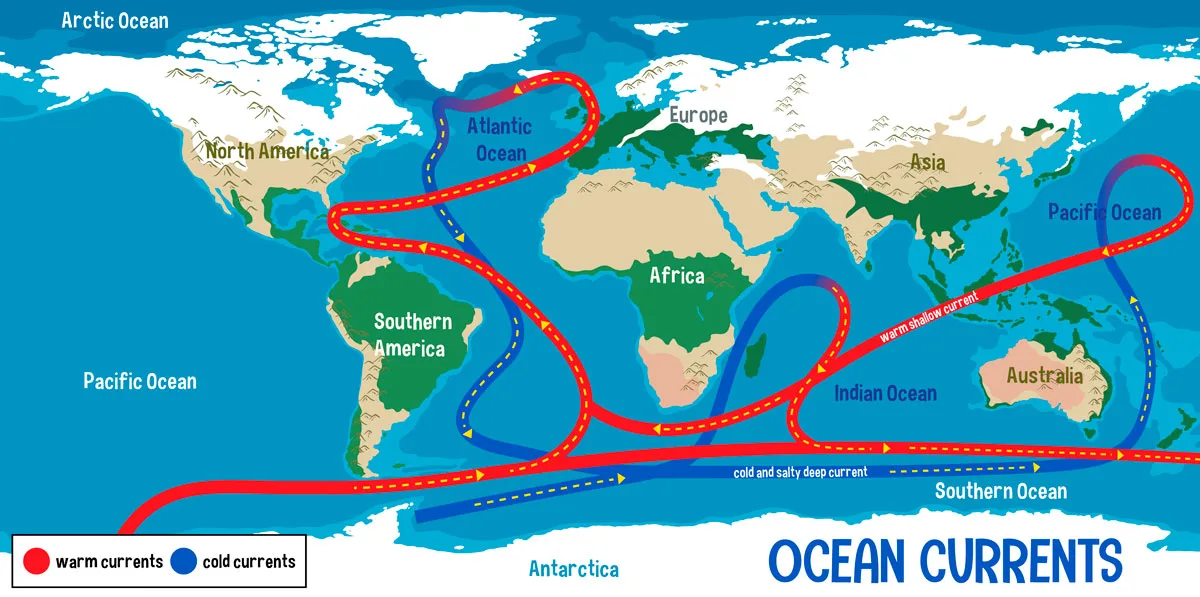
New research suggests the Atlantic Meridional Overturning Circulation could weaken by half this century with wide-ranging consequences for weather, food and sea levels across the world. |
|
|
Graphic: Designed by Magnific. |
|
Algal toxins emerge as a new concern in Alaska’s Northern Bering Sea Alaska Beacon, May 2026 - By Yereth Rosen |
|
Locals who depend on the sea for food and culture are trying to understand the risks to traditional foods and wildlife populations in a region undergoing myriad changes. |
|
Pacific gray whales facing ‘catastrophic’ die-off as climate crisis hits food supply The Guardian, July 2026 - By Tom Perkins |
|
Trump administration urged to relist a species in ‘very, very serious trouble’ under Endangered Species Act. |
|
|
Coastal Ecosystems & Water Quality |
|
Oysters Clean Up More Nitrogen Pollution Than We Thought Eos, June 4, 2026 - By Lisa S. Gardiner |
|
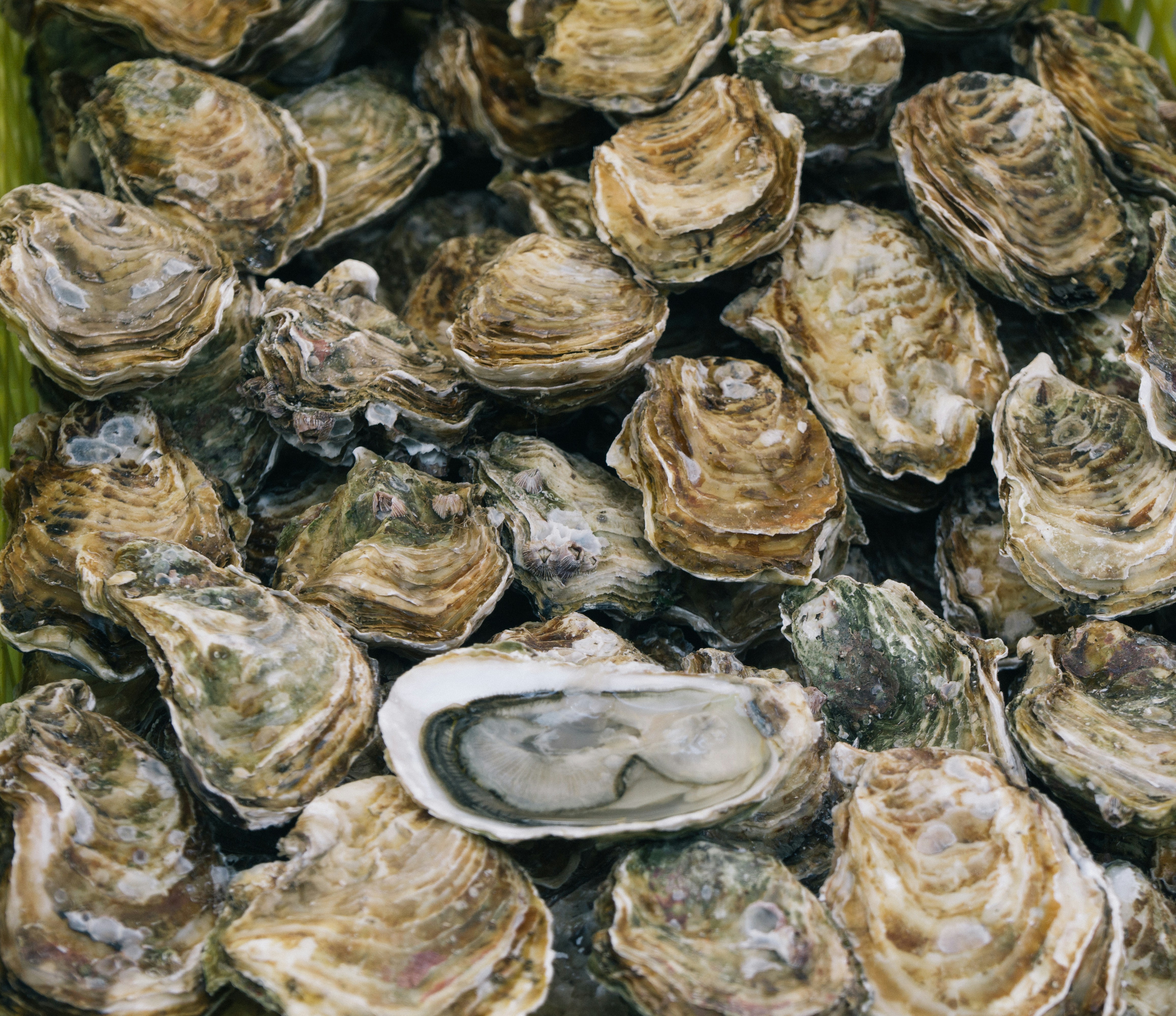
New research has revealed that significant amounts of excess nitrogen in coastal waters are buried as oyster reefs grow and that some reefs trap more nitrogen than others. |
|
The Guardian, June 2, 2026 - By Daniel Shailer on Fair Isle |
|
|
Photo by Ben Stern on Unsplash |
|
Scientists believe they may now have found the cause of Fair Isle’s pollution – and warn that it should be ringing alarm bells in other coastal areas. |
|
Scientific Reports, July 2025 - By Jennifer A. Curtis et al. |
|
This USGS study examines how the 2022 McKinney Fire, followed by intense rain, triggered severe water-quality impacts in the Klamath River, including anoxia, turbidity spikes, and a 95-kilometer fish kill zone. Sensors recorded impairments nearly 300 kilometers downstream, highlighting how rain-on-wildfire events may drive extreme ecological harms in a more fire-prone future. |
|
|
Additional Resources & Recommended Reading |
|
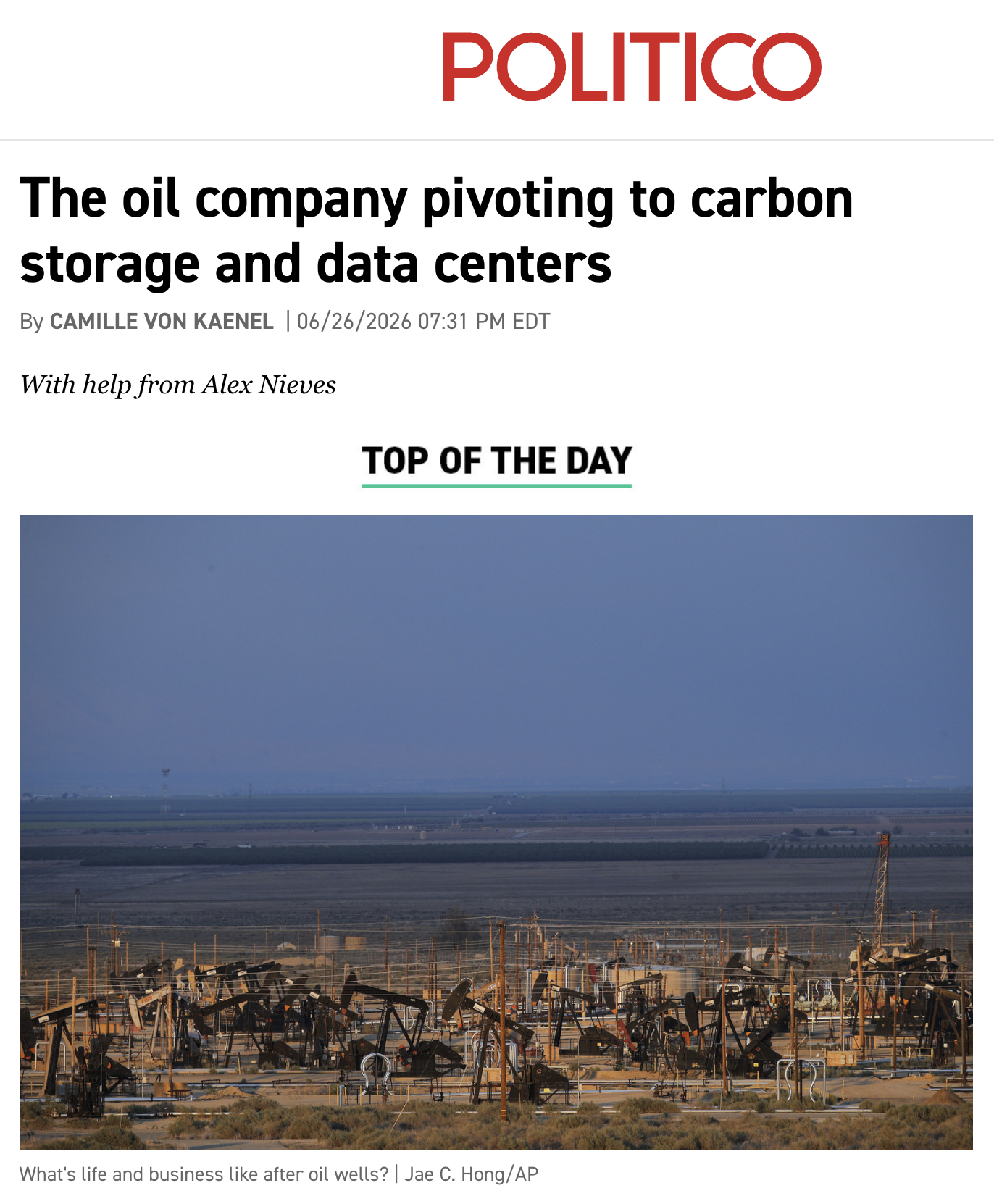
The oil company pivoting to carbon storage and data centers Politico, June 2026 - By Camille Von Kaenel, with help from Alex Nieves |
|
California’s biggest oil producer is trying to become a carbon storage company. And maybe a data center company, too. |
|
Soaring solar and a surge in hydro push more coal off the US grid Ars Technica, May 2026 - By John Timmer |
|
The first data from 2026 seem to indicate that last year was an oddity. |
|
|
Ocean Nexus Webinar | Advancing Equity Through Indigenous Governance: Fisheries in Alaska Ocean Nexus, May 20, 2026 - Presentation + Q&A with Courtney Carothers, Hekia Bodwitch, Craig Kaviak Chythlook, & Yoshitaka Ota |
|
This Ocean Nexus webinar examines efforts to integrate Indigenous Knowledge and Indigenous-led governance into Alaska fisheries management. Speakers discuss initiatives involving the North Pacific Fishery Management Council and Alaska Board of Fisheries, the Tamamta Program’s work to support Tribal sovereignty and Indigenous knowledge systems in fisheries education and research, and the Yukon River Intertribal Fish Commission’s steps toward Indigenous-led fisheries governance. |
|
Deep differences: expanding the marine social sciences and humanities into the deep ocean npj Ocean Sustainability, May 2026 - By Susanna Lidström et al. |
|
This article argues that the deep ocean should be understood not only as a remote natural environment, but as a space connected to people, communities, culture, and the distribution of benefits and harms from human activity. The authors make the case that the deep ocean raises distinct questions for marine social sciences and humanities, just as deep-ocean ecosystems require distinct natural-science approaches. As human impacts expand into deeper waters, they call for more fine-grained research into the relationships between deep-sea environments and society. |
|
What climate leadership looks like in Maine, with Hannah Pingree What If We Get It Right? May 21, 2026 - By Ayana Elizabeth Johnson |
|
In this article and podcast episode, climate writer Ayana Elizabeth Johnson speaks with Maine gubernatorial candidate Hannah Pingree about practical, state-level climate leadership, with relevance for ocean, coastal, and fisheries policy. |
|
|
|

Help Our Work Continue |
|
Independent ocean leadership depends on people like you. Every donation helps us continue bringing together scientists, Indigenous leaders, policymakers, and communities to tackle the greatest challenges facing our ocean. If you value this work, please consider making a donation today. |
|
|
|
|
|


|
Sent by Global Ocean Health ::unsubscribeLink::
|